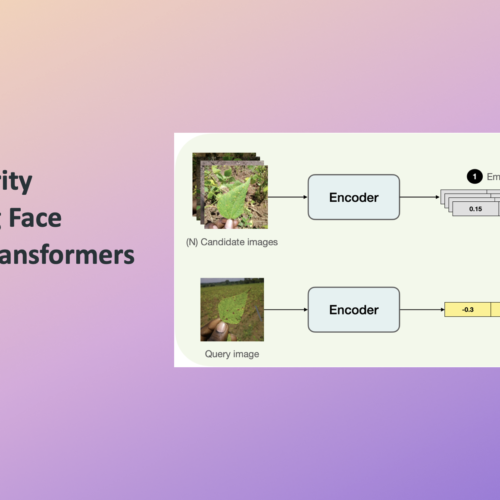
Building Image Similarity System with Hugging Face Datasets and Transformers
Embark on a journey to democratize AI using open source and open science by creating an image similarity system with 🤗 Transformers, enabling reverse image search. Learn to compute image embeddings and utilize cosine similarity to find similar images.
Published 3 years ago on huggingface.co
Abstract
This article guides you in constructing an image similarity system with 🤗 Transformers, emphasizing the computation of image embeddings and utilizing cosine similarity for similarity searches. It showcases the use of a ViT-based model and the 🤗 datasets library to efficiently process candidate images. The post explains how to load a dataset, compute embeddings, and retrieve similar images, culminating in a functional image similarity solution.
Results
This information belongs to the original author(s), honor their efforts by visiting the following link for the full text.
Discussion
How this relates to indie hacking and solopreneurship.
Relevance
This article is essential for you as it provides a practical guide to implementing an image similarity system using Hugging Face Datasets and Transformers. It highlights the importance of computing image embeddings and using cosine similarity for similarity searches, offering a hands-on approach to building a functional solution.
Applicability
To apply the insights from this article, you should start by exploring Hugging Face Datasets and Transformers to build your image similarity system. Focus on computing image embeddings, leveraging cosine similarity for comparing images, and consider extending the system to other vision models and datasets to enhance its versatility.
Risks
One potential risk highlighted in the article is the high memory requirements associated with storing high-dimensional image embeddings, especially when dealing with a large number of candidate images. Additionally, maintaining high-dimensional embeddings can impact the speed and computational complexity of the system, necessitating strategies for dimensionality reduction.
Conclusion
In the long term, the trend towards simplifying the process of building similarity systems, as seen through direct integrations with FAISS provided by 🤗 Datasets, indicates a future where implementing sophisticated AI solutions becomes more accessible. This trend can benefit your projects by streamlining the development of AI-powered features and enhancing the performance of image similarity systems.
References
Further Informations and Sources related to this analysis. See also my Ethical Aggregation policy.
Image Similarity with Hugging Face Datasets and Transformers
We’re on a journey to advance and democratize artificial intelligence through open source and open science.

AI
Explore the cutting-edge world of AI and ML with our latest news, tutorials, and expert insights. Stay ahead in the rapidly evolving field of artificial intelligence and machine learning to elevate your projects and innovations.
Appendices
Most recent articles and analysises.

Discover how AI-focused fintech companies secured 30% of Q2 investments totaling $24 billion, signaling a shift in investor interest. Get insights from Lisa Calhoun on the transformative power of AI in the fintech sector.

Amex's Strategic Investments Unveiled
2024-09-06Discover American Express's capital deployment strategy focusing on technology, marketing, and M&A opportunities as shared by Anna Marrs at the Scotiabank Financials Summit 2024.

PayPal launches a new rewards program offering consumers 5% cash back on a spending category of their choice and allows adding PayPal Debit Card to Apple Wallet.

Explore the significance of gender diversity in cybersecurity, uncover key statistics, and track the progress made in this crucial area.

Discover how Docker and JFrog collaborate to boost secure software and AI application development at SwampUP, featuring Docker CEO Scott Johnston's keynote.

Discover the innovative hospitality experience at Marriott Long Beach Downtown, blending warm hospitality with Southern California culture in immersive settings.